- Welcome to Al-Mawaleh
- Majan building , Opposite CSK cafe ,Ghala,Muscat Governorate,Sultanate of Oman
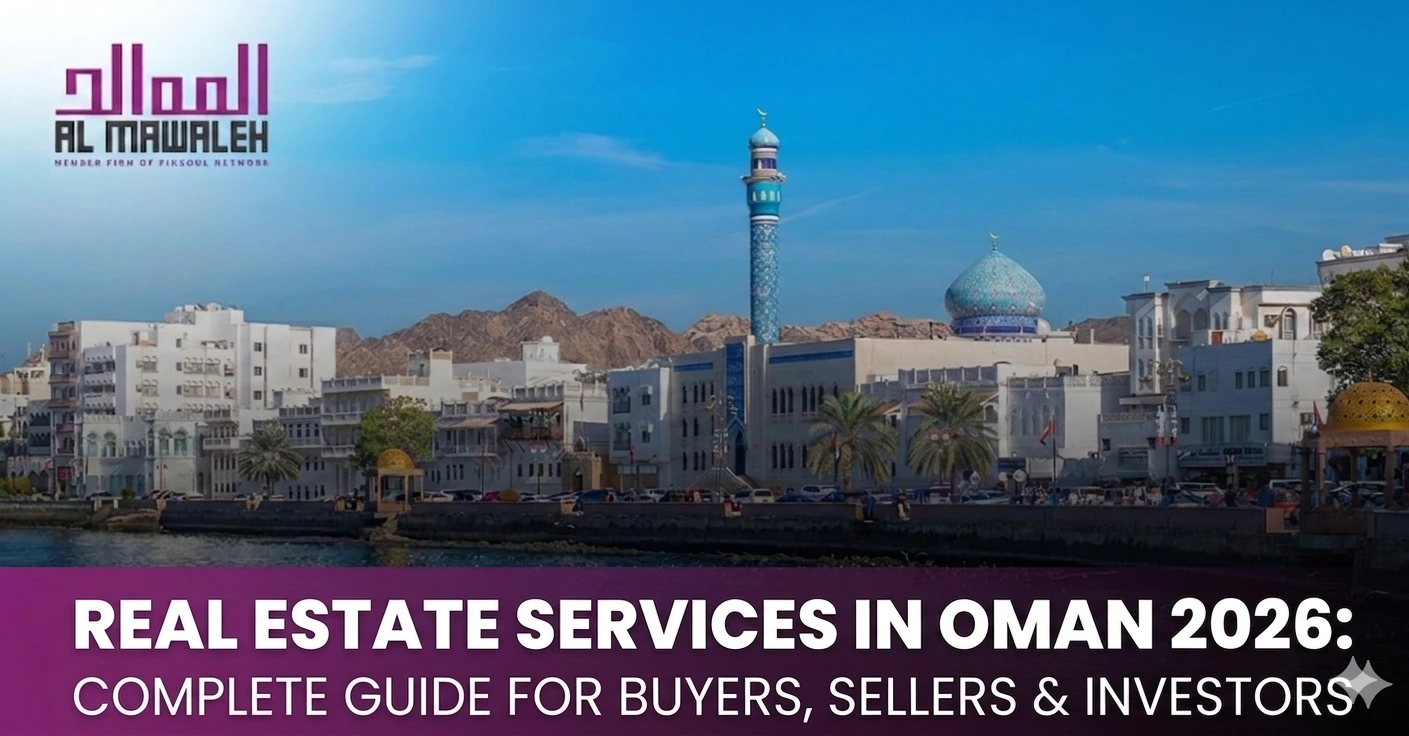
Oman’s property market has shifted noticeably over the past two years, and 2026 is shaping up to be one of the more active periods the Sultanate has seen. Residential prices are climbing, new freehold zones are opening, and a fresh real estate law has reorganized how brokers, developers, and property managers are licensed. With that much movement, knowing which real estate services in Oman you actually need, and who is legally allowed to provide them, makes a real difference to how smoothly a purchase, sale, or investment goes. At Al Mawaleh, we work with buyers, sellers, and investors navigating exactly these questions, so this guide pulls together what matters most heading into 2026.
Oman’s residential property prices rose close to 19% year-on-year heading into 2026, with prime developments such as Al Mouj Muscat seeing even sharper gains. A handful of structural factors are driving this: a young, growing population, an expatriate workforce that makes up roughly 44% of residents, and only around 5,500 new residential units delivered annually against far higher demand.
The investment case is helped further by Oman’s tax position. There is no personal income tax, no capital gains tax, and no annual property tax, which means rental yields in Muscat, typically running between 6% and 9%, largely stay intact for the investor. Add a currency pegged to the US dollar and a residency program tied to property investment, and it is easy to see why both regional and international buyers are paying closer attention to Oman this year.
Before discussing services, it helps to understand what foreigners can actually own. Oman allows two routes into property ownership for non-Omanis.
Integrated Tourism Complexes (ITCs), such as Al Mouj Muscat, Muscat Bay, Jebel Sifah, and Muscat Hills, allow 100% freehold ownership for foreign buyers with no nationality restriction. Ownership in an approved ITC also grants the buyer and their immediate family a renewable residency permit, which is one of the more attractive draws for international investors.
Usufruct rights apply outside ITC zones and allow foreigners to hold long-term rights, generally up to 99 years, in eligible buildings, typically those with four or more floors. This route usually requires the buyer to have held Omani residency for at least two years and meet a minimum property value, so it suits residents already established in the country more than first-time foreign buyers.
A complete transaction in Oman rarely involves just one provider, which is why most of our clients at Al Mawaleh end up coordinating several specialists rather than relying on a single contact. The full range of real estate services in Oman typically includes brokerage and agency support for finding or marketing a property, legal and title registration assistance, mortgage and financing facilitation, property management for owners who do not live on-site, and ongoing maintenance once a property is occupied or tenanted.
Since the Real Estate Regulation Law (Royal Decree 79/2025) came into effect, all of these activities sit under stricter oversight from the Ministry of Housing and Urban Planning (MHUP), which now holds direct enforcement powers over licensing, registration, and professional conduct across the sector. Working with properly licensed real estate services in Oman providers is no longer just good practice; unlicensed brokerage and unregistered property management both carry real penalties under the new law.
Real estate companies in Oman range from large international names publishing market data and analysis to local agencies and independent brokers offering personalized support. For sellers, a good company typically provides a market valuation, professional photography, listing exposure, and negotiation support through to registration. For buyers, the same company usually handles property search, viewings, price negotiation, and document coordination.
It is worth checking that any property firm you engage holds an active brokerage license from MHUP and appears on the ministry’s approved list, since the 2025 law specifically tightened registration requirements for brokerage firms operating in the Sultanate.
Individual real estate agents in Oman must be at least 21 years old, hold a clean legal record, and complete an accredited real estate training course before receiving a broker registration card from MHUP. Brokerage firms themselves are required to maintain at least 80% Omanization among their registered brokers, which shapes how many firms structure their teams.
When working with an agent, ask directly whether they hold a current MHUP registration card and whether their brokerage company appears on the ministry’s approved list. Commission is typically paid by the seller rather than the buyer, so it is worth clarifying this upfront if you are unsure which side is covering the fee.
For investors who do not live in Oman year-round, property management services in Oman cover rent collection, tenant sourcing and screening, lease renewals, and acting as the day-to-day point of contact for the property. This is a separate license category from brokerage under current regulations, so the company managing a rented unit is not always the same one that sold it.
A good manager also handles owners’ association coordination in shared developments, since the 2025 real estate law placed new emphasis on how jointly owned buildings are governed and maintained. For absentee landlords, this single point of accountability is often the deciding factor in whether a rental property performs well or quietly underperforms.
Property maintenance services in Oman cover everything from routine upkeep, such as HVAC servicing and landscaping in ITC communities, to reactive repairs and emergency call-outs. In most ITC developments, an annual service or maintenance charge is built into ownership, covering shared facilities like pools, security, and common areas, separate from whatever maintenance the individual unit itself needs.
Skipping this kind of upkeep is one of the more common ways investors quietly erode their rental yield, since deferred maintenance tends to show up later as vacancy, tenant turnover, or a lower resale price. Building a maintenance budget into the numbers from day one, rather than treating it as an afterthought, protects the return on the property over the full holding period.
Cost Item | Typical Range |
Registration fee (foreign buyers) | 3% of property value |
Registration fee (Omani nationals) | 1% of property value |
Mortgage registration fee | Capped at 0.5% |
Deposit at reservation | 10%–20% of property value |
Mortgage financing (eligible foreigners) | Up to 80% loan-to-value, terms up to 25 years |
Annual ITC service/maintenance charge | Varies by development |
Brokerage commission | Typically paid by the seller |
Most of the mistakes below are avoidable with the right real estate services in Oman lined up before you sign anything.
Oman’s property market in 2026 offers a genuinely attractive combination of tax-free returns, a stable currency, and clear ownership rules for foreign buyers in ITC zones, but the details still matter. Getting the right mix of real estate services in Oman, from a licensed broker through to ongoing property management and maintenance, is what turns a promising market into a property that actually performs the way the numbers suggested it would. Al Mawaleh works alongside buyers, sellers, and investors at every stage of that process, so reach out if you want support making sense of where and how to invest in 2026.
Yes, but only in designated areas. Foreigners can buy 100% freehold property in approved Integrated Tourism Complexes (ITCs), and can hold long-term usufruct rights of up to 99 years in eligible buildings outside ITCs, subject to residency and value conditions.
Many investors find it attractive due to zero property tax, zero capital gains tax, rental yields of 6% to 9% in Muscat, a dollar-pegged currency, and a residency permit tied to ITC property ownership, though returns depend heavily on location and property type.
Oman does not charge personal income tax, capital gains tax, or an annual property tax. Buyers do pay a one-time registration fee of 3% for foreign buyers or 1% for Omani nationals, along with a capped mortgage registration fee where financing is used.
Established ITC developments such as Al Mouj Muscat, Muscat Hills, and Muscat Bay remain popular for their infrastructure, rental demand, and residency benefits, while growth areas like Sultan Haitham City and Yiti are drawing attention for long-term capital appreciation.
Yes. Real estate agents and brokerage companies must be registered and licensed through the Ministry of Housing and Urban Planning, and operating without this registration is illegal under Oman’s current real estate regulation law.

Al Mawaleh is a leading financial consultant company in Oman, delivering expert accounting services, professional auditors, and trusted financial solutions advisor support for businesses through top financial consulting firms expertise.
