- Welcome to Al-Mawaleh
- Majan building , Opposite CSK cafe ,Ghala,Muscat Governorate,Sultanate of Oman

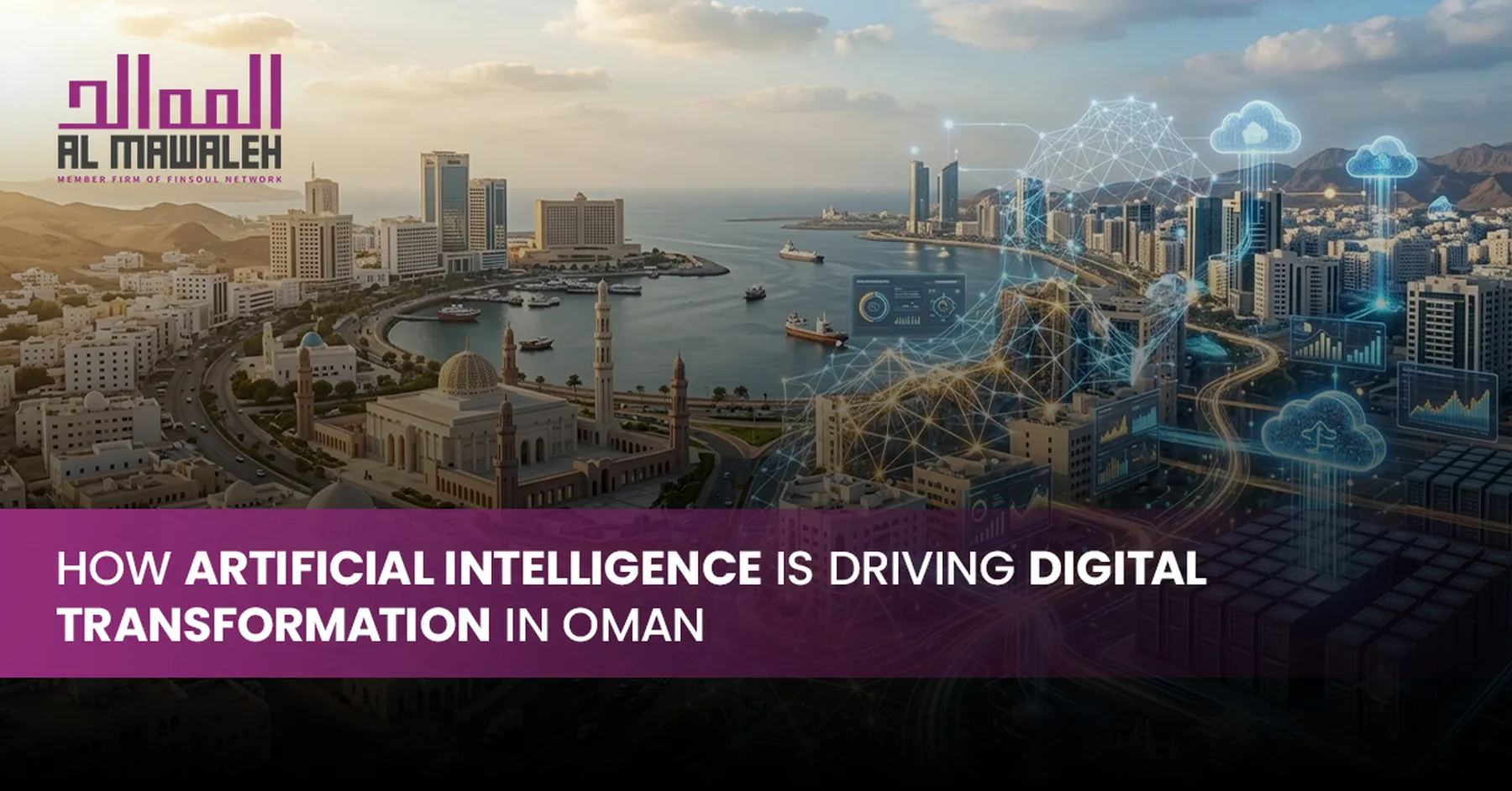
Oman is entering a new phase of its economic story, and artificial intelligence sits at the center of it. Digital Transformation in Oman is no longer a slogan attached to strategy documents; it is a funded, structured national effort already changing how ministries operate, how industries compete, and how businesses plan for the future. From a homegrown Arabic-language AI model to a purpose-built innovation zone in Muscat, the Sultanate is treating AI as core economic infrastructure rather than a passing trend.
At Al Mawaleh, we help businesses make sense of this shift and turn it into a practical advantage. This article breaks down every major piece of the strategy behind Digital Transformation in Oman, from national policy to the opportunities it opens up for private businesses.
Every major AI initiative in the country traces back to Oman Vision 2040, the 20-year roadmap that names technology as a core pillar of economic diversification. The target is ambitious: growing the digital economy’s share of GDP from around 2% to 10% by 2040. To get there, the government launched the National Program for Artificial Intelligence and Advanced Digital Technologies, running through 2026, built around three priorities: expanding AI adoption across sectors, developing local AI capability through research and partnerships, and establishing governance frameworks that keep AI use safe and accountable.
This top-down clarity is a big part of why Digital Transformation in Oman feels different from similar efforts elsewhere in the region. It isn’t just enthusiasm for AI; it’s a structured plan with measurable targets behind it.
Government spending tells its own story. Oman has invested more than RO 79 million into artificial intelligence, supporting a growing cluster of specialized AI companies and helping the digital economy contribute hundreds of millions of rials to GDP. Government services have moved online at scale too, with millions of digital transactions processed annually and thousands of services now fully digitized. This level of sustained funding is what separates genuine Digital Transformation in Oman from short-lived pilot programs; the money keeps flowing well past the announcement stage.
One of the most distinctive pieces of this strategy is Ma’een, Oman’s first advanced national language model. Unlike AI tools built primarily for global markets, Ma’een was trained on local data with Arabic-language capability and Omani context in mind, supporting government tasks like drafting, translation, and document analysis.
This reflects a broader principle: the goal isn’t to import AI wholesale, but to build tools that preserve local language and decision-making context while still delivering real productivity gains. As Ma’een expands into a wider decision-support platform across ministries, it will likely shape how other sector-specific Artificial Intelligence Solutions get developed across the country.
Formalized through Royal Decree No. 50/2026, the Muscat AI Special Zone gives AI-focused companies a more flexible regulatory environment along with incentives designed to attract investment and talent. Rather than functioning as a simple business park, the zone is designed to work like a platform offering faster licensing, easier access to investors, and a clearer path for startups to scale into regional markets.
For business owners watching Digital Transformation in Oman unfold, the zone is a clear signal of intent: the government isn’t just encouraging AI adoption internally; it’s actively attracting global companies and talent to build here, which should increase the availability of local Artificial Intelligence Solutions in the years ahead.
The push behind Digital Transformation in Oman isn’t confined to government IT departments. Several sectors are already seeing tangible shifts:
This cross-sector momentum is a useful signal for private businesses; it shows exactly where demand for Digital Transformation Services is likely to grow fastest in the coming years.
None of this works without people who can actually implement it. Programs like Makin have already trained more than 11,000 Omanis in digital skills, steadily growing the local talent pool. This is a meaningful shift for companies that previously relied entirely on external consultants for anything AI-related. It’s becoming increasingly realistic to build capability in-house, supported where needed by experienced Digital Transformation Services providers.
As AI adoption accelerates, so does the need for clear rules around how it’s used. Oman’s approach pairs adoption with governance, building sovereign cloud infrastructure to reduce dependence on international providers, and developing regulatory frameworks intended to keep AI deployment safe, ethical, and transparent. For businesses, this matters because a predictable regulatory environment reduces the uncertainty that often slows enterprise AI adoption elsewhere, making long-term investment in Artificial Intelligence Solutions easier to plan around with confidence.
The next phase of Digital Transformation in Oman is arguably its most ambitious. The 2026–2030 roadmap includes dedicated digital transformation centres in all 11 governorates, each shaped around that region’s economic strengths, alongside an expanding Ma’een platform and continued investment in sovereign cloud infrastructure. The intent is clear: spread the benefits of Oman Digital Transformation well beyond Muscat and into every part of the country’s economy, from tourism and fisheries to manufacturing.
For companies weighing whether to act now or later, a few realities stand out. Government procurement is shifting, and vendors with genuine AI Consulting Oman expertise are better positioned to participate in public-sector partnerships and digitization projects. Early movers who integrate practical AI tools into customer service, analytics, or operations now will be ahead of competitors waiting for AI adoption to become standard practice. And as Digital Transformation in Oman extends into tourism, food security, and manufacturing, businesses in these sectors have a genuine opportunity to apply AI for cost reduction and new revenue streams.
Even with strong national momentum, most businesses don’t have the internal expertise to translate policy-level change into operational results on their own. This is where experienced AI Consulting Oman partners add real value, helping organizations run readiness assessments, prioritize the right use cases, and implement Artificial Intelligence Solutions in ways that actually fit their operations rather than adopting technology for its own sake. Reliable Digital Transformation Services also provide the ongoing support businesses need as Oman’s regulatory and governance frameworks continue to evolve.
Digital Innovation in Oman is being built deliberately through national investment, a sovereign AI model, a dedicated innovation zone, sector-wide adoption, and a governance framework designed to earn public trust. As the 2026–2030 phase unfolds, the businesses that engage early with Digital Transformation in Oman will be the ones best positioned to benefit from government partnerships, operational efficiency, and new market opportunities across the Sultanate’s diversifying economy.
At Al Mawaleh, we help businesses turn this national momentum into practical results from AI readiness assessments to full-scale Digital Transformation Services and hands-on AI Consulting Oman support. As Digital Business Transformation Oman continues to accelerate, Al Mawaleh is here to help your business move with it, not catch up to it.
It’s driven by Oman Vision 2040 and executed through the National Program for Artificial Intelligence and Advanced Digital Technologies (2024–2026), which focuses on AI adoption, local capability-building, and governance.
Ma’een is Oman’s national Arabic-language AI model, built to support government tasks like drafting, translation, and analysis while keeping data sovereign.
Established under Royal Decree 50/2026, it offers AI-focused companies faster licensing, investor access, and a more flexible regulatory environment.
Healthcare, transportation and logistics, energy, education, and government operations are currently the priority sectors.
Start with a readiness assessment, identify a small number of high-impact use cases, and work with an experienced consulting partner to implement and scale gradually.