- Welcome to Al-Mawaleh
- Majan building , Opposite CSK cafe ,Ghala,Muscat Governorate,Sultanate of Oman

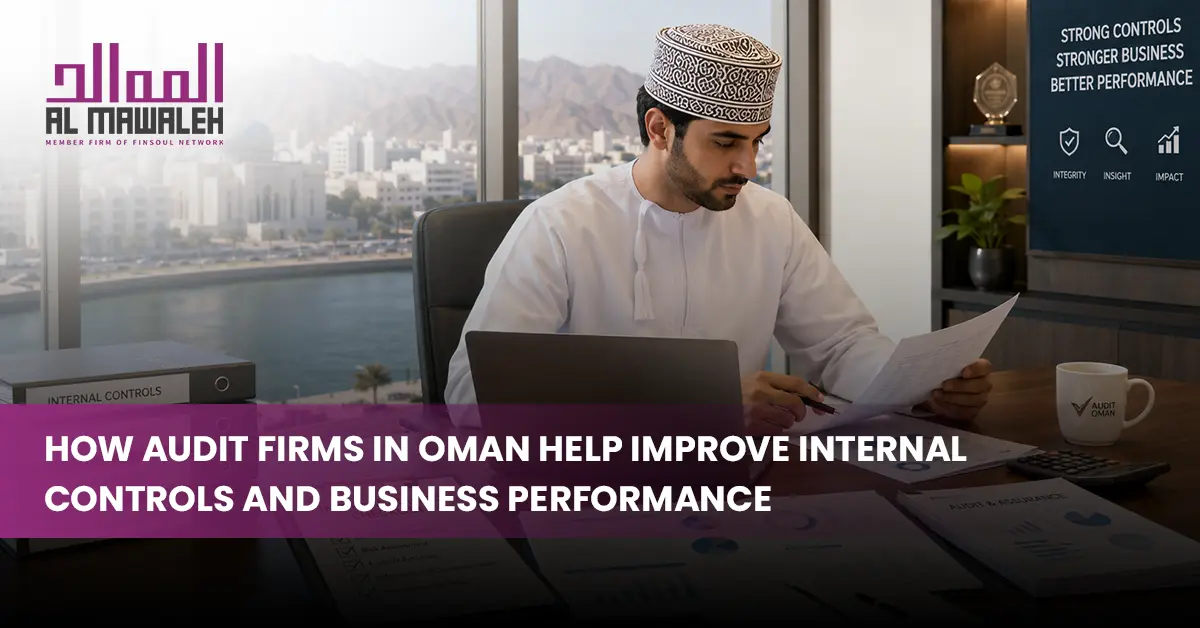
Every growing business in the Sultanate eventually asks the same question: are our financial and operational processes actually working the way they should? Owners and finance managers often sense that something is slipping a late reconciliation, a missed approval, a vendor invoice that looks off but without a structured review, these small signs rarely get investigated properly. This is exactly where audit firms in Oman step in.
Companies like Al Mawaleh work closely with business owners to review financial records, test internal processes, and flag risks before they turn into costly problems. In this blog, we will look at how audit firms in Oman support internal controls, improve accountability, and ultimately help businesses perform better, along with what to expect from a well-run audit engagement.
Internal controls are the checks and balances that keep a business running- approval limits, segregation of duties, expense tracking, and reconciliation processes. Without them, even profitable companies can suffer from fraud, mismanagement, or simple human error that goes unnoticed for months.
This is where internal audit services Oman providers add real value. Rather than only reviewing numbers at year-end, internal audit teams work throughout the year to test whether controls are being followed, whether they are strong enough, and where gaps exist.
For many small and medium-sized enterprises, controls are built informally as the business grows, often relying on trust between staff rather than documented procedures. That works fine at first, but as headcount and transaction volume increase, the same informal approach quietly becomes a liability. A structured review brings discipline back into daily operations without slowing the business down.
Most businesses assume their controls are solid until an audit proves otherwise. Some of the most frequent issues found by auditing firms Oman teams include:
Identifying these gaps early is far cheaper than discovering them after a loss has already occurred. In many cases, management is genuinely surprised by how a small, everyday shortcut such as a manager approving their own expenses had gone unnoticed for years simply because no one had reviewed the process end to end.
A structured engagement with audit firms in Oman usually follows a clear path, and this is what makes the process so effective for management teams that want lasting improvements rather than a one-time report.
Before testing anything, auditors identify which areas of the business carry the highest financial or operational risk. This ensures time is spent where it matters most, rather than spreading effort evenly across low-risk areas.
Auditors sample transactions, review approval trails, and interview staff to see whether documented policies are actually being followed day to day. This step often reveals the gap between what a policy document says and what actually happens on the ground.
A good report doesn’t just list problems. It explains the business impact and recommends realistic, prioritized fixes that management can act on immediately, ranked by urgency so leadership knows exactly where to focus first.
The best audit firms in Oman don’t disappear after the report is delivered. They check back to confirm recommendations were actually implemented and working as intended.
Internal audit in Oman is often viewed narrowly as a compliance requirement, but its real value goes far beyond ticking a box. When controls are strong, management gets more reliable numbers to base decisions on, budgets are easier to defend, and cash flow forecasting becomes more accurate.
Regular internal audit work also builds a culture of accountability. Employees know that processes are periodically reviewed, which naturally reduces careless errors and discourages any temptation toward misuse of company resources.
There is also a strategic angle that is easy to overlook. Investors, banks, and potential partners look far more favorably on a business that can demonstrate strong governance. When audit firms in Oman are engaged consistently rather than as a last-minute exercise, it signals maturity and that reputation can directly influence financing terms, partnership opportunities, and even valuation during a sale or investment round.
Internal Control Area | Risk Without Review | Benefit of Regular Audit |
Purchase approvals | Unauthorized spending | Spending stays within budget |
Cash handling | Theft or unrecorded losses | Accurate cash position |
Vendor payments | Duplicate or fraudulent payments | Verified, documented payments |
Payroll processing | Ghost employees, errors | Accurate payroll records |
Inventory management | Stock shrinkage | Reliable stock data |
Not every audit engagement delivers the same value, so it helps to know what separates a strong partner from an average one. Look for a firm with practical industry experience, clear communication, and a willingness to explain findings in plain language rather than technical jargon. Auditing firms Oman clients return to year after year tend to combine technical accuracy with genuine business understanding.
It also helps to choose a partner who offers both internal audit services Oman businesses need for ongoing monitoring and broader advisory support for growth planning, tax matters, and compliance.
Ask prospective firms how they handle confidentiality, how their team communicates findings during the engagement rather than only at the end, and whether they tailor their approach to your industry rather than applying a generic checklist. These small details often separate a report that gathers dust from one that genuinely changes how a business operates.
Beyond the formal report, companies that go through a proper audit cycle tend to notice a few consistent outcomes over time:
None of these benefits appear overnight. They build up gradually as controls are tightened, staff gets used to following documented procedures, and management starts using audit findings as a planning tool rather than just a compliance formality. This is ultimately what separates businesses that treat auditing as a checkbox exercise from those that treat it as a genuine management tool.
Strong internal controls don’t happen by accident they are built and maintained through consistent review. Partnering with experienced audit firms in Oman gives business owners the confidence that their financial systems are sound, their risks are managed, and their performance is backed by accurate data. Al Mawaleh continues to support companies across Oman with practical, results-focused audit work that goes beyond compliance to genuine business improvement.
Strong internal controls help businesses reduce financial risks, improve accountability, and make better decisions with confidence. Al Mawaleh provides practical audit and internal audit services in Oman, helping businesses identify control gaps, improve financial processes, and implement effective solutions. Contact our team today to strengthen your internal controls and build a more reliable foundation for long-term business growth.
Location
Majan Building, Opposite CSK Cafe, Ghala, Muscat Governorate, Sultanate of Oman
Email
info@mawaleh.com
Phone
+968 7733 8545
They review financial records, approval processes, and operational workflows to confirm controls are working and identify any risk areas needing attention.
Most businesses benefit from at least one internal audit cycle per year, though higher-risk operations may need quarterly reviews.
No, small and medium businesses benefit just as much, since weak controls can cause proportionally larger damage to smaller operations that don’t have deep financial reserves to absorb losses.
Internal audit focuses on improving processes and controls throughout the year, while external audit primarily verifies financial statements for reporting purposes.
Timelines vary by company size and scope, but most engagements run from a few weeks to a couple of months, covering planning, fieldwork, and the final reporting stage.