- Welcome to Al-Mawaleh
- Majan building , Opposite CSK cafe ,Ghala,Muscat Governorate,Sultanate of Oman

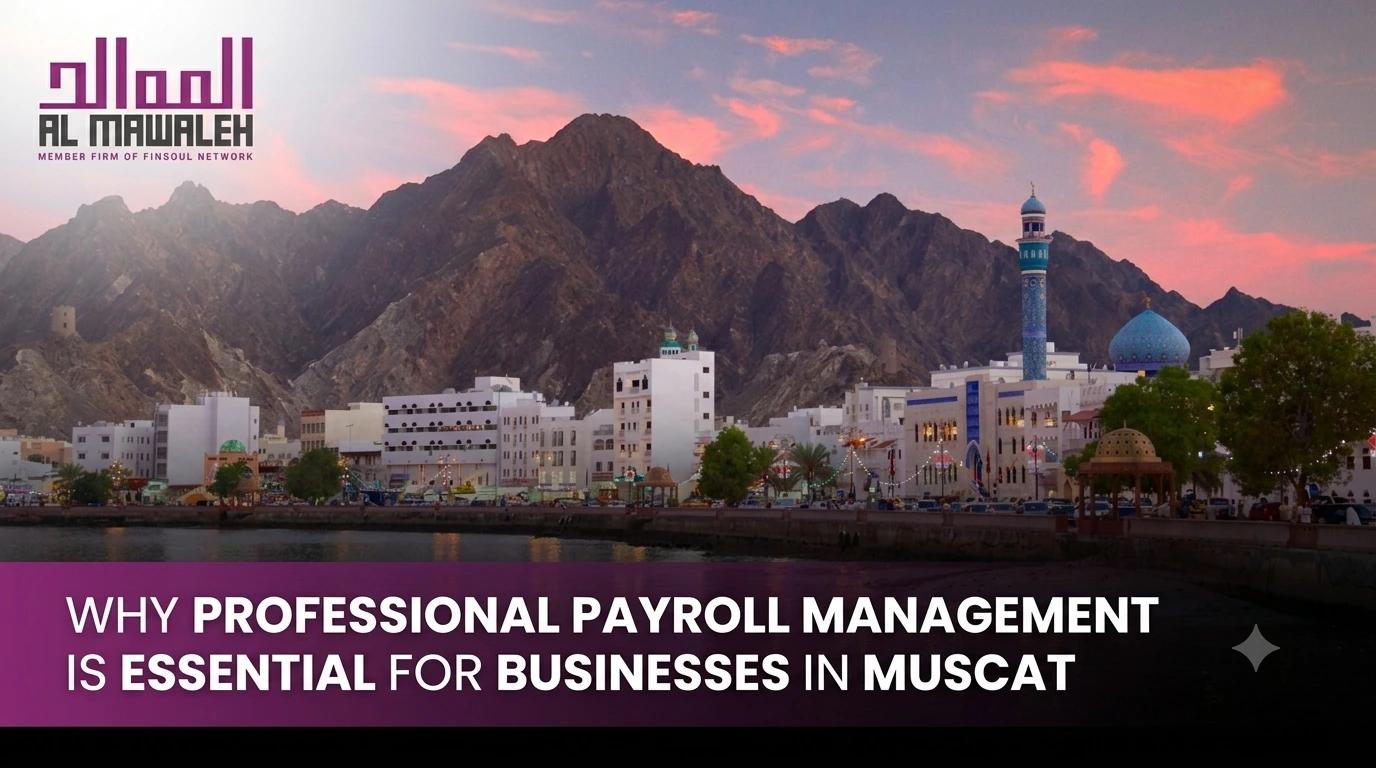
Running a business in Oman’s capital offers significant opportunities, but it also comes with strict regulatory responsibilities that can challenge even established companies. One of the most important areas is payroll. Errors in salary processing do not just affect employee satisfaction, they can lead to penalties, restrictions on work permits, and increased scrutiny from the Ministry of Labour.
This is why payroll management Muscat has become an essential business function across the Sultanate. At Al Mawaleh, we support companies throughout Muscat by simplifying payroll processes, helping maintain compliance with labour regulations, and allowing business owners to focus on operational growth. In this blog, we explore the importance of professional payroll support, outline the current regulatory environment, and explain how expert guidance can help safeguard your business.
Payroll in Oman runs on a monthly cycle, and the rules around how, when, and through what channels employees must be paid are tightly regulated. Most companies use the 25th of the month as a payroll cut-off, with salaries due to employees shortly after. But the process involves far more than simply transferring money; it requires accurate calculation of basic salary, housing and transport allowances, overtime, statutory deductions, and final settlements, all of which must align precisely with each employee’s contract.
For businesses unfamiliar with the nuances of Omani labour regulation, payroll management Muscat quickly becomes a minefield of compliance risk. This is precisely why so many companies are turning to dedicated payroll services Muscat to manage the process correctly from day one.
One of the most important regulatory frameworks shaping payroll management in Muscat is the Wage Protection System (WPS). Introduced by the Ministry of Labour under Ministerial Decision No. 299 of 2023, the WPS is an electronic salary transfer mechanism developed in coordination with the Central Bank of Oman to ensure employees are paid correctly, on time, and through traceable banking channels.
Under the WPS, employers must submit a monthly Salary Information File (SIF) detailing every employee’s basic salary, allowances, deductions, and net pay. This file is processed through an approved bank, and wages must be transferred to each employee’s local bank account within a defined window after the end of the pay period. Cash payments and informal salary arrangements are strictly prohibited.
Non-compliance carries real consequences. The Ministry of Labour can issue formal warnings, block a company’s ability to obtain new work permits, or impose fines for each instance of a wage violation, with penalties escalating on repeat offenses. Businesses are also required to retain payroll records, salary slips, and WPS confirmation files for several years in case of inspection.
For companies without dedicated payroll expertise, keeping pace with WPS formatting rules, submission deadlines, and reconciliation requirements is genuinely difficult. A single formatting error in a Salary Information File can result in the entire submission being rejected, creating a cascade of late-payment risk. This is one of the clearest reasons professional payroll management in Muscat has become essential rather than optional.
Oman’s labour and social protection framework has evolved significantly in recent years. The Social Protection Law introduced a unified Social Protection Fund covering insurance and savings contributions, with provisions being rolled out in phases through 2026. Combined with WPS obligations, minimum wage requirements, Omanisation quotas, and end-of-service entitlements, the compliance burden on internal HR teams has grown substantially. Professional payroll management Muscat ensures businesses stay ahead of these changes rather than reacting to them after a violation occurs.
Errors in payroll processing are not just an internal inconvenience; they carry direct financial and operational risk. Late or incorrect wage payments can result in fines, blocked work permit applications, and scrutiny from the Ministry of Labour. Engaging experienced payroll consultants Muscat significantly reduces this risk by ensuring every submission is accurate, properly formatted, and filed within the required deadlines.
For small and mid-sized businesses, payroll processing can consume disproportionate amounts of administrative time, particularly when done manually. Outsourcing payroll management in Muscat to a specialized provider allows internal teams to focus on core business operations instead of chasing salary calculations, social security contributions, and statutory filings every month.
Omani payroll involves multiple variables: basic salary, fixed allowances, overtime premiums (which vary depending on timing and day worked), leave entitlements, and statutory deductions for Omani nationals’ social security contributions. A professional payroll provider ensures these calculations are consistently accurate, reducing disputes and strengthening trust between employer and employee.
Payroll data includes sensitive personal and financial information. Professional hr and payroll services providers implement secure systems and confidentiality protocols that many in-house setups, particularly in smaller businesses, are simply not equipped to maintain at the same standard.
As companies expand their workforce in Muscat, payroll complexity grows with it: more employees, more contract variations, more allowances, and more reporting obligations. A structured payroll management Muscat solution scales smoothly with business growth, without requiring a proportional increase in internal HR headcount.
When evaluating providers for payroll management Muscat, businesses should look for:
Working with experienced payroll consultants Muscat who understand both the technical requirements of WPS submissions and the broader HR compliance landscape gives businesses confidence that their payroll function is fully protected against regulatory risk.
Our team brings deep, hands-on experience with Oman’s payroll and labour compliance landscape. Our services include:
We understand that no two businesses are alike, which is why our approach to payroll management Muscat is tailored to each client’s size, sector, and workforce structure, whether you are a small business processing payroll for a handful of staff or a growing company managing a diverse, multinational workforce.
Payroll is no longer a back-office formality in Oman it is a regulated, closely monitored function with real consequences for businesses that get it wrong. From Wage Protection System submissions to social security contributions and end-of-service entitlements, the compliance demands placed on companies operating in the capital make professional payroll management Muscat a necessity rather than a convenience. Businesses that try to manage this complexity internally, without dedicated expertise, expose themselves to unnecessary financial and reputational risk.
At Al Mawaleh, we help businesses across Muscat take full control of their payroll obligations, combining accurate processing with deep regulatory knowledge to keep companies compliant and employees paid correctly, every time. Whether you need full-service payroll management Muscat, WPS compliance support, or integrated hr and payroll services, our team is ready to help your business operate with confidence. Reach out to Al Mawaleh today to see how we can simplify payroll for your organization.
The Wage Protection System (WPS) is an electronic salary transfer system introduced by Oman’s Ministry of Labour to ensure employees receive wages accurately, on time, and through approved banking channels. Private sector employers are required to register and submit monthly salary records. Proper payroll management in Muscat helps businesses stay compliant and avoid penalties or operational disruptions.
Salaries in Oman are generally processed on a monthly basis and transferred directly to employees’ bank accounts within the required timeframe after each pay cycle. Employers must ensure payments match employment contract terms, including allowances and overtime, to maintain payroll compliance.
Failure to comply with WPS and payroll requirements may lead to warnings, financial penalties, increased regulatory monitoring, and restrictions on obtaining new work permits. Maintaining accurate payroll processes helps businesses reduce compliance risks and avoid interruptions.
Many small and medium-sized businesses choose outsourced payroll services because they reduce administrative burden and lower compliance risk. Professional payroll providers can manage salary processing, regulatory updates, and reporting requirements more efficiently than in-house teams with limited resources.
Professional HR and payroll services typically cover salary processing, WPS support, statutory deductions, leave and attendance tracking, end-of-service calculations, and compliance management. Integrated HR and payroll solutions help businesses improve accuracy and streamline operations.